Snow in Korea 2026/27: When It Snows, Where to See It and What to Wear

This guide contains affiliate links to Trip.com. If you book through them, Korea Local Guide may earn a commission at no extra cost to you. It does not change what is recommended or the order of the route.
Every winter my phone lights up on the same day. Friends send photos of the window, the street, the car roof. Koreans call it cheotnun, the first snow, and it is a small national event. People make plans for it, and couples promise to meet when it falls.
If you are coming to Korea for snow, you should know one thing first. Seoul gets snow, but it rarely stays long. For snow you can walk through, you go to the mountains, and that is easy to do from Seoul without a car.
Checked on October 26, 2026. Weather changes every year. Use the dates below as odds, not promises, and check the forecast a few days before you go.
When does it snow in Korea?
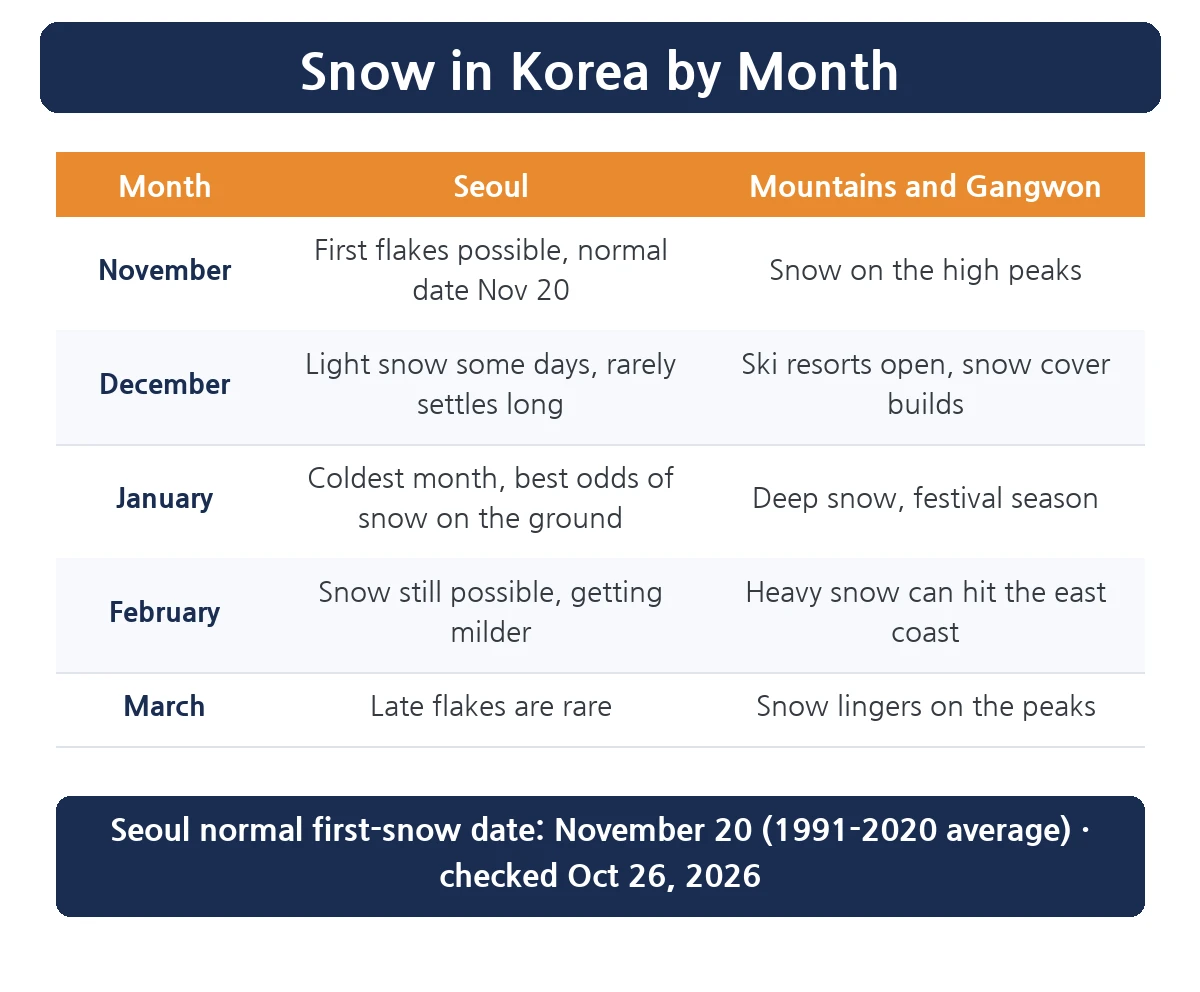
The Korea Meteorological Administration counts Seoul’s first snow from one official station. The 1991 to 2020 normal date is November 20, and it counts even if the flakes melt before they land.
Real years swing a lot. In 2024 the first snow came on November 27, and it turned into the heaviest November snowfall Seoul had recorded since 1907. In 2025, news reports put the first snow on December 4. So the first snow can come any time from mid-November to early December.
For snow on the ground, January is your best month. It is the coldest month, so snow that falls tends to stay a day or two. December brings the first real snow days, and February can still surprise you.
Will there be a white Christmas in Seoul?
Probably not. A December 2025 Korea Herald report counted only 11 Christmas Days with snowfall in Seoul in the 34 years since 1991. That is about one year in three. If snow on Christmas matters to you, plan a day in the mountains. See our Christmas in Korea guide for what the city does instead.
Where to see snow in Korea
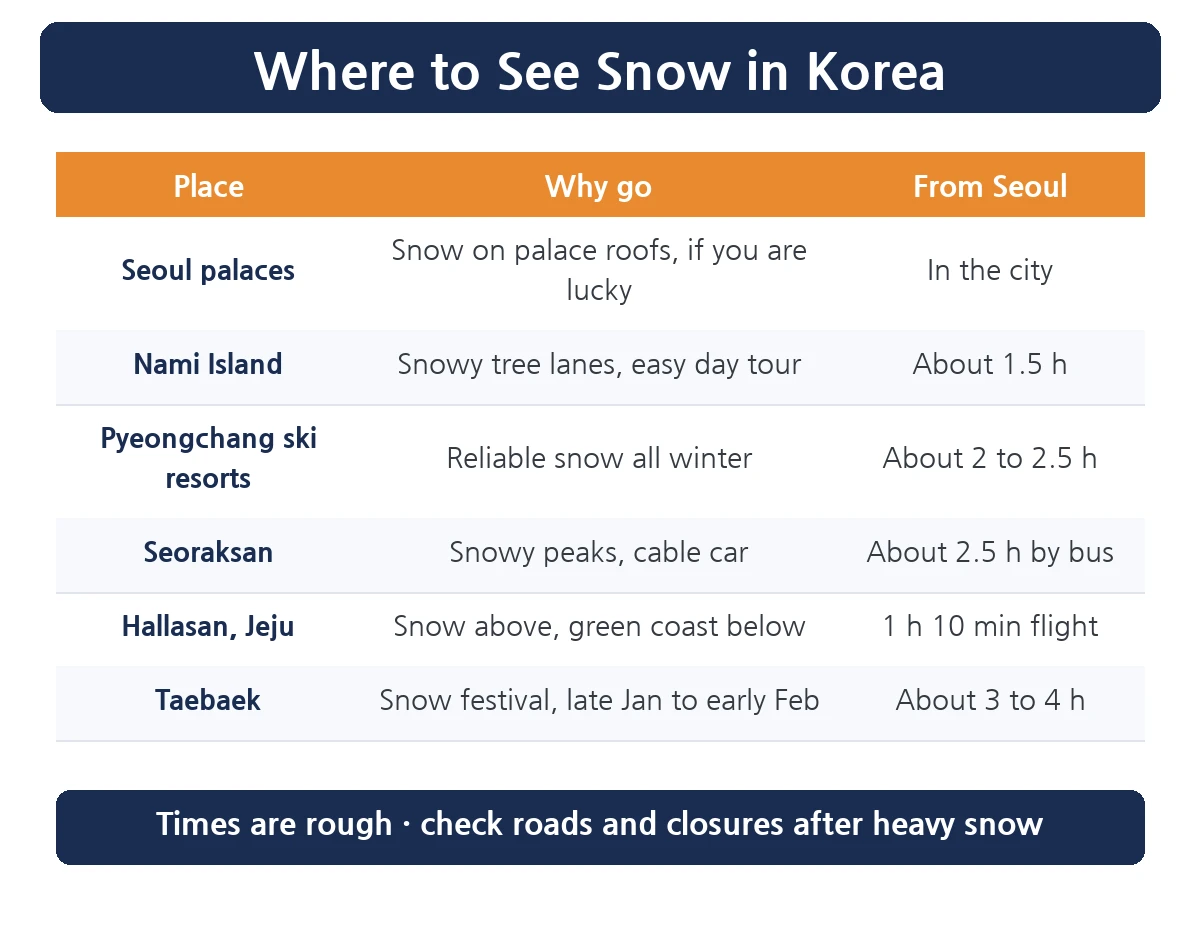
Seoul: palaces in the snow
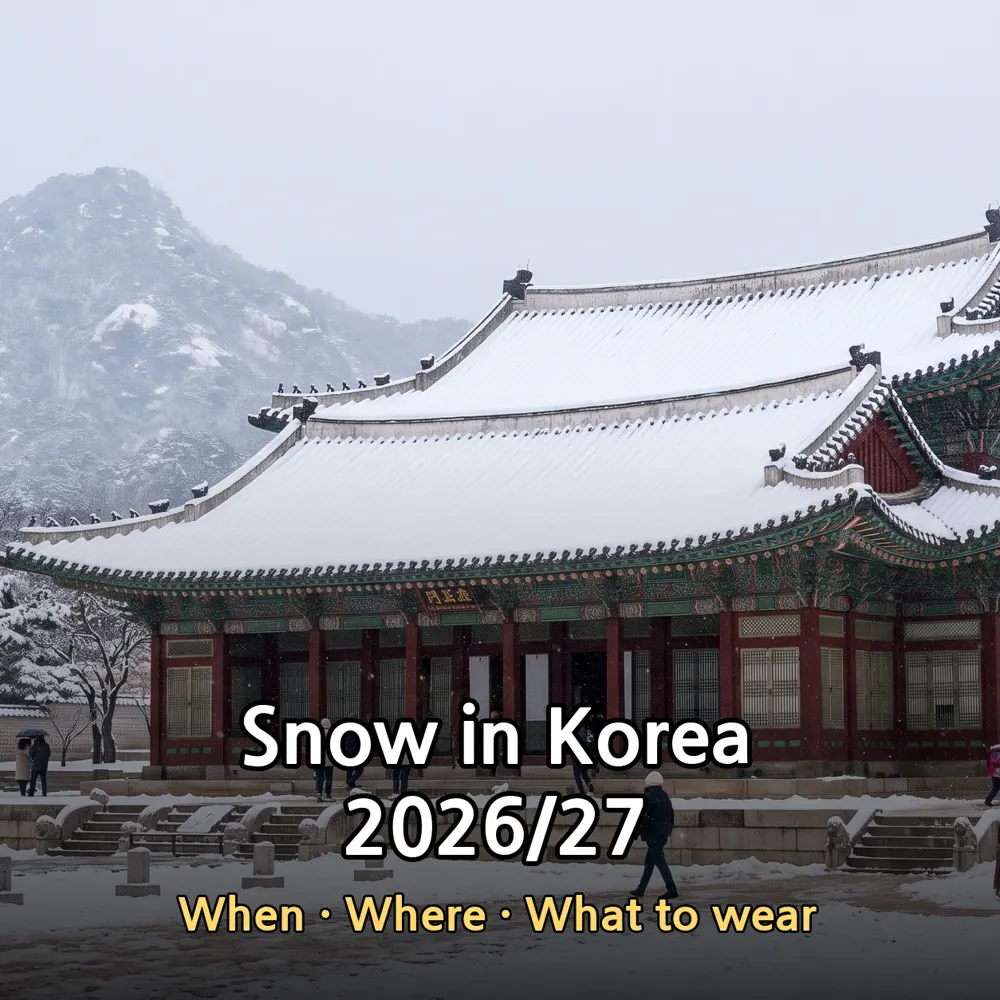
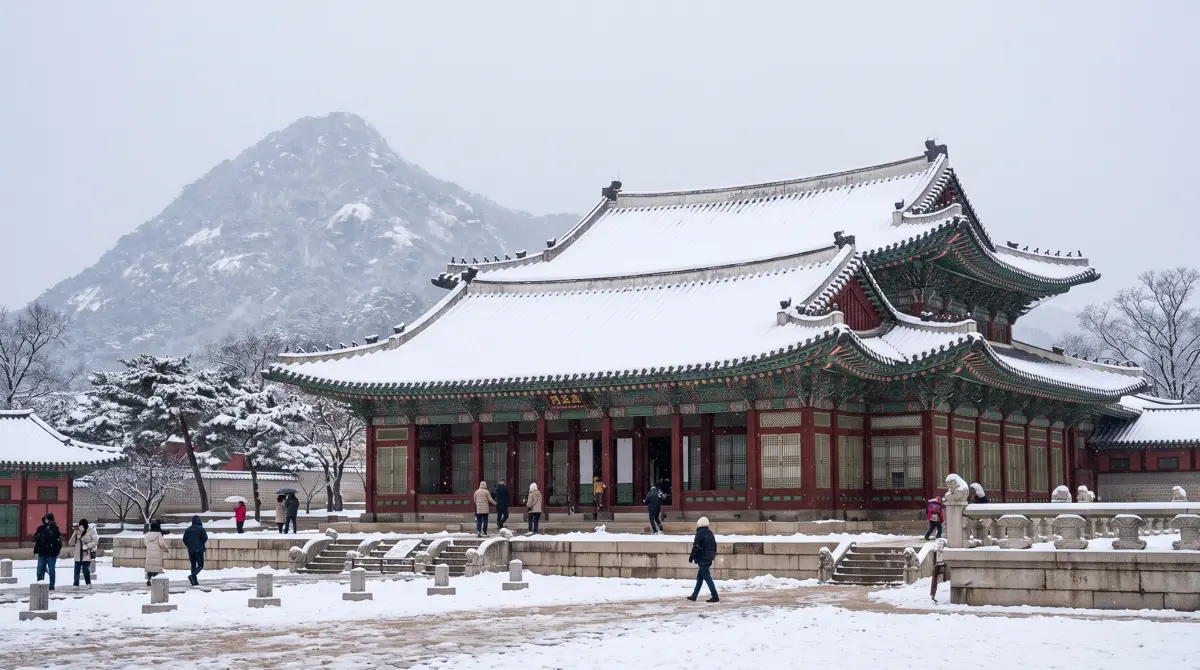
When snow does settle in Seoul, go to a palace early. Gyeongbokgung and Changdeokgung look their best with white roofs and few people. Snow crunches under your shoes and the courtyards go quiet. You have a few hours before it turns to slush. Our Seoul in winter guide has a 3-day plan.
Nami Island and the hills east of Seoul
Nami Island is the classic snowy day trip. Its tree-lined lanes were made famous by a Korean drama, and the hills around it get more snow than the city. A day tour handles the transport and adds a couple of other stops.
Pyeongchang and the ski resorts
For sure snow, go to Gangwon Province. The ski resorts around Pyeongchang have snow all winter, natural and machine-made, and you can go just to play in it. Many resorts run shuttle buses from Seoul. Our ski resorts in Korea guide compares them.
Seoraksan and the east coast
Seoraksan turns white from the top down, and the cable car takes you up without a hike. The east coast towns of Sokcho and Gangneung sometimes get big snowfalls in late winter, when cold air meets the sea. See our Seoraksan guide and Sokcho guide.
Hallasan, Jeju
Jeju’s coast rarely sees settled snow, but Hallasan often wears snow from December to February. You can walk among palm trees in the morning and snowy trees at lunch. Winter trails close earlier, so read our Hallasan hiking guide first.
Snow festivals in winter 2027
The biggest one is the Taebaeksan Snow Festival in Taebaek, with giant snow sculptures. It usually runs from late January to early February; the 2026 edition ended on February 8. The Daegwallyeong Snow Flower Festival near Pyeongchang has run in January and February in past years.
When we checked on October 26, 2026, neither had announced 2027 dates. Check the official sites from December. Our Korea in January guide covers the ice fishing festivals too.
Getting around in the snow
Do not rent a car for a snow trip. Snow chains, icy mountain roads and Korean road signs are not worth it. Use KTX trains, express buses and tour buses. They run in all but the worst storms.
After heavy snow, check if cable cars and mountain trails are open. Use Naver Map or KakaoMap for directions. Google Maps does not give full transit directions in Korea, and you will need mobile data for both apps. An eSIM set up before you fly is the easiest way to get it.
What to wear
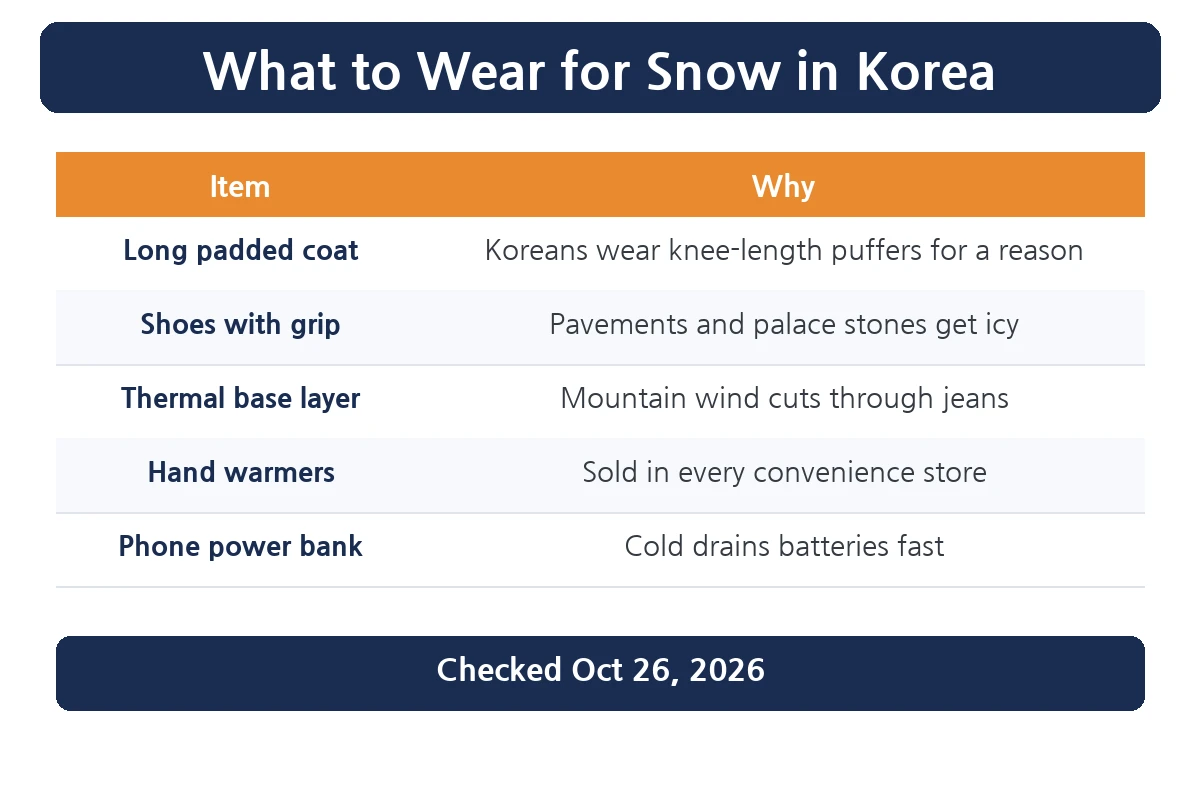
Korean cold is dry and windy. A day at minus 5 degrees with wind feels colder than the number. Wear layers, a hat and gloves, and shoes that grip on ice. Convenience stores sell hand warmers for a few hundred won each.
Checklist
- Plan snow trips for January for the best odds
- Book a mountain day if you want guaranteed snow
- Check cable car and trail notices after a storm
- Bring shoes with grip and a long padded coat
- Keep your phone warm and carry a power bank
FAQ
When is the first snow in Seoul?
The 1991 to 2020 normal date is November 20. Recent years ranged from mid-November to early December; 2025’s first snow came on December 4.
What month has the most snow in Korea?
January usually gives the best chance of snow on the ground in Seoul. The mountains of Gangwon have snow from December to February, and the east coast can get heavy snow in February.
Does it snow in Busan?
Rarely. Busan is mild and snow there is unusual news. Go to Gangwon or Hallasan for snow.
Where can I see snow near Seoul?
Nami Island, the ski resorts of Gyeonggi and Gangwon, and Seoraksan are all reachable as day trips by bus, train or tour.
Is Christmas in Seoul snowy?
Usually not. Only 11 of the 34 Christmas Days since 1991 had snowfall in Seoul.
The short version
Seoul’s first snow normally comes around November 20, but it rarely stays. For real snow, come in January and head to the mountains: Nami Island, Pyeongchang, Seoraksan or Hallasan. Leave the car, take trains and buses, and dress for wind as well as cold. See our Korea in December guide for the rest of the season.