Sokcho 2026: A 2-Day Trip from Seoul by Bus (Harbor, Market, Seoraksan)

This guide contains affiliate links to Trip.com. If you book through them, Korea Local Guide may earn a commission at no extra cost to you. It does not change what is recommended or the order of the route.
Sokcho is where the mountains meet the East Sea. On a clear morning you can stand on the harbor wall, smell diesel and drying squid, and look straight up at the granite peaks of Seoraksan. Very few places in Korea give you both in one view.
Most visitors treat Sokcho as the town you sleep in before hiking Seoraksan. That is a mistake. The town has its own reasons to stay: a village built by refugees from the North, a ferry pulled across the harbor by hand, a market that smells of fried chicken and sea salt, and two lakes in the middle of the city.
Checked on October 21, 2026. Bus times and fares are from 2026 guides; check the booking site before you travel. There is no train to Sokcho yet, so the bus is the way in.

Seoul to Sokcho by bus

There are two bus terminals in Sokcho, and which one you arrive at depends on where you leave from in Seoul. Buses from Seoul Express Bus Terminal in Gangnam go to Sokcho Express Bus Terminal, near the beach. Buses from Dong Seoul Terminal go to Sokcho Intercity Bus Terminal, near the central market. Both trips take roughly two and a half hours, longer on Friday evenings and holiday weekends.
Pick your hotel first, then pick the terminal closest to it. On weekends, buy the ticket a few days ahead.
Inside Sokcho, you move by city bus, short taxi rides and your feet. For bus routes, use Naver Map or KakaoMap. Google Maps does not give full walking or transit directions in Korea, and both Korean apps need mobile data. The simplest fix is a Korean eSIM bundled with a T-money card, which also pays the city bus.
Things to do in Sokcho: a 2-day route


Day 1: Abai Village, the ferry and the market
Start at Abai Village, a strip of houses on a sand spit between the harbor and the sea. It was settled by people from the North during the Korean War who expected to go home soon and never could. “Abai” means old man in their dialect. Today it is known for sundae, Korean blood sausage, and especially ojingeo sundae, squid stuffed with rice and vegetables, sliced and pan-fried in egg.
To cross the harbor, take the Gaetbae, a flat ferry pulled along a steel cable by the passengers and a crew member. The ride lasts about a minute. A 2026 guide lists the fare at 500 won one way for adults; tickets are from a machine at the landing.
On the other side, walk to Sokcho Jungang Market. The ground floor is food: dakgangjeong (crispy sweet fried chicken, sold in boxes to take away), fried seafood, rice cakes and dried squid. The basement is the fish market. Locals buy dakgangjeong here before the bus home, and you should too.
End the day at Yeonggeumjeong, a small pavilion on rocks at the end of a footbridge near the lighthouse. At sunset the sea goes silver, then grey, and you hear the waves hitting the rocks below the bridge. Bring a warm layer; the wind here is serious from November.
Day 2: Seoraksan and the beach
Go early. City buses 7 and 7-1 run from the Intercity Bus Terminal area to the Seoraksan entrance at Seorak-dong. At the park, choose one: the Seoraksan cable car up to the Gwongeumseong viewpoint, or the flat-ish walk to Biryong Falls. The cable car queue is long on weekends; arriving when it opens makes the difference. Our Seoraksan guide covers the trails, hours and when the foliage peaks.
Come back down for lunch, then go to Sokcho Beach. The sand is wide and clean, and in the cold months it is almost empty. Right by the beach is Sokcho Eye, a Ferris wheel about 65 m tall. One turn takes about 15 minutes and gives you the whole picture: harbor, lakes, town and mountains in one circle. Check the ticket price on the day.
Catch an evening bus back to Seoul, or continue south to Gangneung. Our Gangneung guide picks up from there by KTX.
Where to stay
For a car-free trip, stay either near Sokcho Beach (for the Express Bus Terminal and the Ferris wheel) or near the central market (for the Intercity Bus Terminal and the Seoraksan buses). The big resort hotels along the beach have sea views; the small hotels near the market are cheaper and closer to dinner.
Lotte Resort Sokcho sits on the coast in the south of town, with a view of the sea from most rooms.
Rough budget

When to go
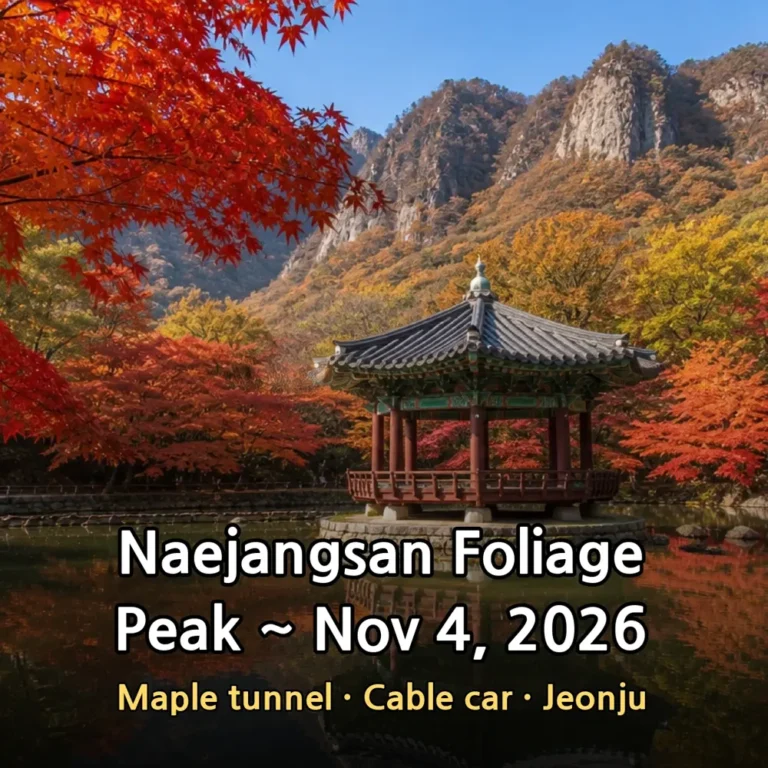
- Autumn (October to early November): foliage on Seoraksan, clear air, the busiest weekends of the year
- Winter: cold wind, empty beaches, snow on the peaks, the clearest sunrises
- Spring: cherry blossoms around Yeongnangho Lake
- Summer: beach season, hot and crowded, book early
Checklist
- Choose your hotel area, then the matching bus terminal
- Book weekend buses a few days ahead
- Set up Naver Map or KakaoMap and mobile data
- Get to the Seoraksan cable car when it opens
- Bring a windproof layer for the coast, even in spring
FAQ
How do I get from Seoul to Sokcho?
By express bus, about 2 hours 20 to 2 hours 30. Buses leave from Seoul Express Bus Terminal and from Dong Seoul Terminal. There is no direct train yet.
Is Sokcho worth visiting without hiking?
Yes. The harbor, Abai Village, the market and the beach make a full day. The Seoraksan cable car lets you see the peaks without a long climb.
How many days do I need in Sokcho?
Two days is right: one for the town and coast, one for Seoraksan. Add a day if you want a real hike.
Do I need a car in Sokcho?
No. City buses and short taxi rides cover everything on this route, including the Seoraksan entrance.
What food is Sokcho famous for?
Squid sundae, Abai sundae, dakgangjeong from the central market, and fresh seafood from the harbor.
The short version
Take the bus from Seoul, spend day one at Abai Village, on the hand-pulled ferry, in the central market and at Yeonggeumjeong for sunset, and day two at Seoraksan and Sokcho Beach. You do not need a car, but you do need mobile data for the Korean map apps.