Jeju in December: Camellias, Snow on Hallasan and a 3-Day Plan (2026)

This guide contains affiliate links to Trip.com. If you book through them, Korea Local Guide may earn a commission at no extra cost to you. It does not change what is recommended or the order of the route.
December is when Jeju’s winter character shows. The camellias that start in mid-November reach their peak, Hallasan gets its first real snow, and the tangerine harvest is everywhere you look. It is also windier and greyer than autumn, which is why many guides skip it. They should not.
This guide covers what December is actually like, the one rule that catches visitors out on Hallasan, and a three-day route that keeps you out of the wind.
Written in October 2026 for December 2026. Check the Hallasan National Park reservation page and weather before you go.

What December weather is like
Daytime temperatures on the coast are usually in the single digits to around 10°C, rarely below freezing. The wind is the real factor: strong northwesterlies make it feel several degrees colder, especially on the north coast. The south side around Seogwipo is noticeably milder.
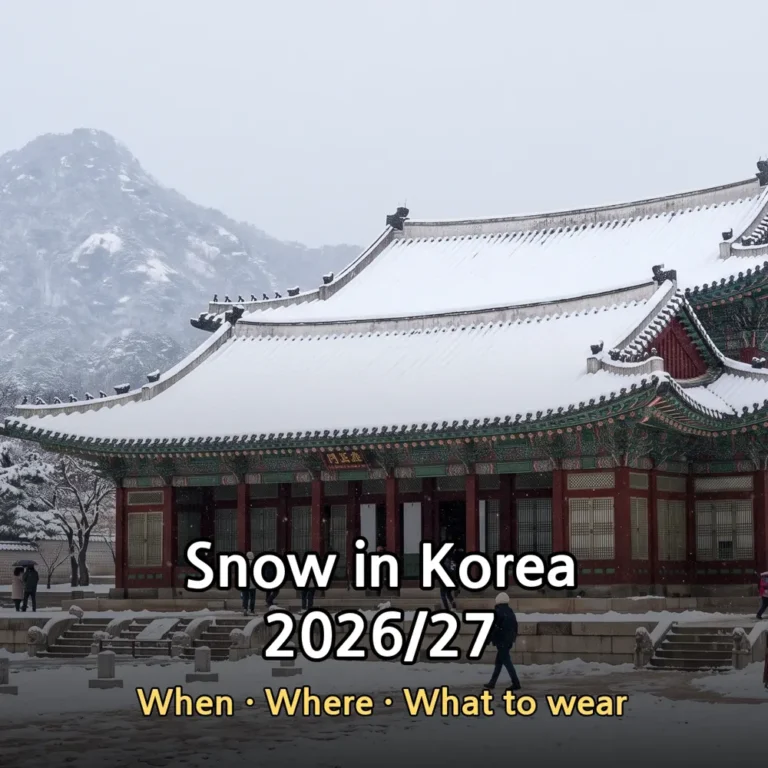
The mountain is different. Above about 1,000 metres it is properly winter, and the upper trails are often snow-covered from December.
Camellias at their peak
December is the best month for camellias. Camellia Hill near Andeok is the best-known garden, with paths lined with pink and red flowers and petals on the ground. Wimi-ri camellia colony in Namwon is quieter and more local.
Hallasan in snow — and the reservation rule
Hallasan’s summit trails (Seongpanak and Gwaneumsa) require an online reservation made in advance through the Hallasan National Park reservation system. Without one you cannot start those trails. Reservations open ahead and weekend slots in snow season go fast.
If you do not have a reservation, or you are not equipped for a full summit day, the Eorimok and Yeongsil trails to Witse Oreum give you snow-covered crater views in a half day, without the summit reservation.
In snow you need crampons (sold in convenience stores and outdoor shops near trailheads), gloves and proper layers. Trail start times are earlier in winter; check them before you go.
Tangerine season
The tangerine harvest runs through the winter. Many farms around Seogwipo offer pick-your-own sessions with payment on site. Even if you skip that, roadside stalls and markets sell boxes cheaply.
A 3-day December route


The idea is to keep the windy north coast short and spend most time on the sheltered south side.
Day 1 — east and Seongsan. Fly in, head east to Seongsan Ilchulbong early, then Seopjikoji. Keep the afternoon indoors or in a sheltered spot when the wind picks up.
Day 2 — Hallasan. Summit via Seongpanak if you have a reservation, or Eorimok/Yeongsil to Witse Oreum for a shorter snow walk. Stay in Seogwipo that night.
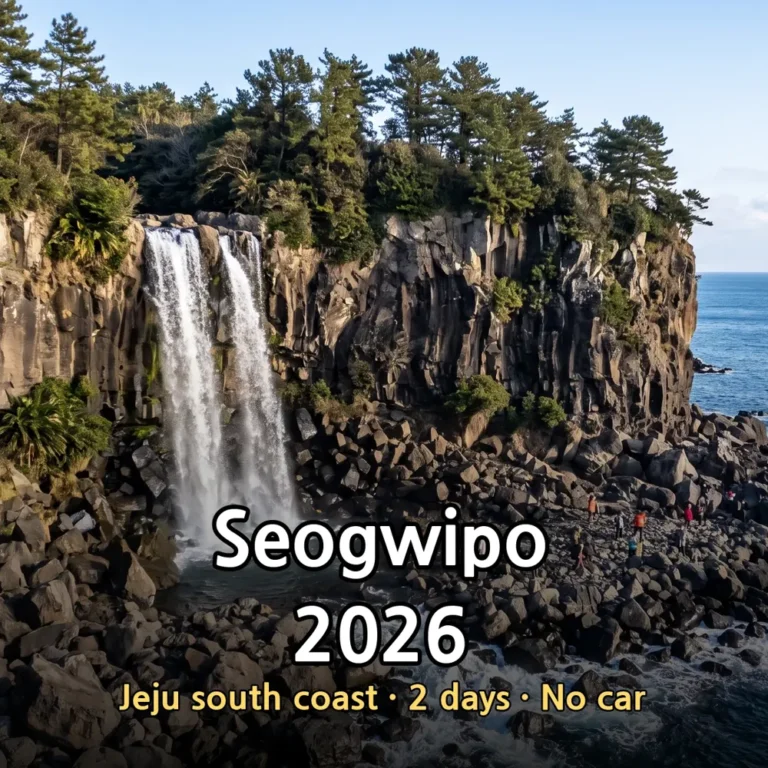
Day 3 — camellias and the south coast. Camellia Hill in the morning, a tangerine farm, then Cheonjiyeon Falls and Olle Market before the airport.
November, December or January?

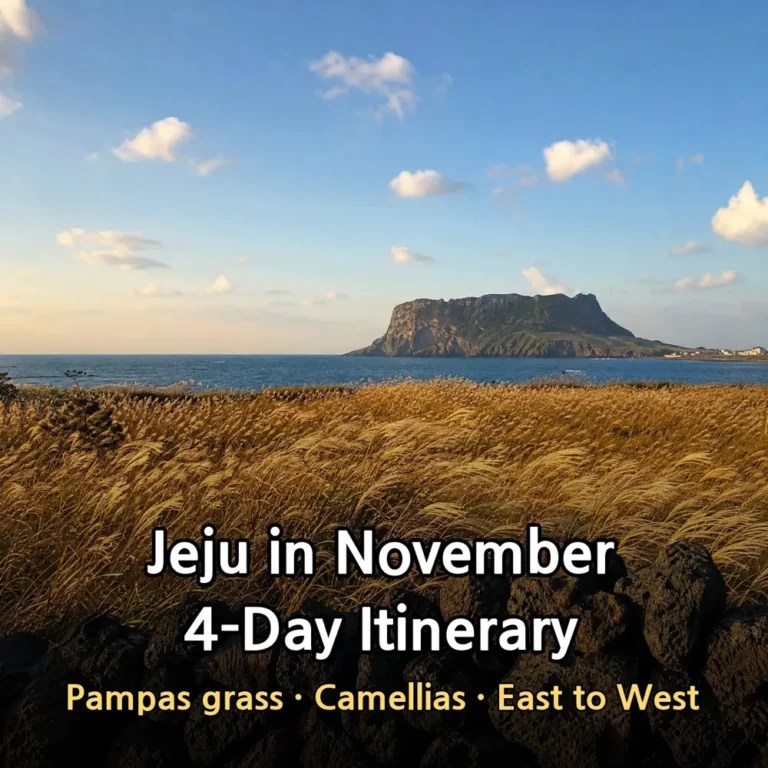
November still has silver pampas grass on the oreum and milder wind; the first camellias appear mid-month. December is the camellia peak and the start of snow on Hallasan, with the fewest visitors before the year-end holidays. January is the coldest month, with the most reliable snow on the mountain and late-season camellias, but the wind on the north coast can be harsh.
If you can choose only one winter month for both flowers and snow, choose mid to late December.
When the wind wins: indoor options
Some December days are simply too windy for coastal walks. Keep one indoor plan per day:
- Arte Museum Jeju near Aewol: an immersive media-art space, good for a whole afternoon.
- Tea museums and tea fields around Seogwipo and Andeok: the green tea fields are still green in winter, and the museum cafes are warm.
- Seogwipo Maeil Olle Market: covered, with hot street food — fish cakes, tangerine snacks, grilled skewers.
Where to stay
In December, base yourself on the south side: Seogwipo or Jungmun are milder and closer to Hallasan’s southern trailheads and the camellia gardens.
Getting around
Jeju’s buses are card-only, so carry a T-money card. Buses on the 1100 Road (such as route 240) reach the Eorimok and Yeongsil trailheads, but winter road closures can affect them. Use Naver Map or KakaoMap, and consider taxis for trailheads on snowy days.
What to pack
- A windproof jacket and a warm mid layer
- Hat and gloves (essential on the north coast and the mountain)
- Crampons if you will hike above the treeline
- Waterproof shoes for wet, windy days
FAQ
Is December a good time to visit Jeju?
Yes, if you want camellias, snow on Hallasan and fewer crowds. It is not beach weather.
Do I need a reservation to climb Hallasan?
For the summit trails (Seongpanak, Gwaneumsa), yes. Eorimok and Yeongsil do not go to the summit.
Does it snow on the coast?
Rarely, and it does not usually stay. Snow is on the mountain.
When do the camellias peak?
December, continuing into January depending on the variety.
Visiting a month earlier? Our Jeju in November itinerary covers the pampas grass season.
The short version
Stay on the south side, book a Hallasan summit slot if you want the top, bring windproof layers, and spend a morning in the camellias. December Jeju is quiet, cold at the coast and beautiful on the mountain.