Korea in July 2027: Weather, Rainy Season, Beaches and Where to Go

This guide contains affiliate links to Trip.com. If you book through them, Korea Local Guide may earn a commission at no extra cost to you. It does not change what is recommended or the order of the route.
People who live in Korea have a simple opinion about July. It is the month you plan your day around the sky.
Mornings can look perfect. By two o’clock the rain is bouncing off the pavement, and by four the sun is back and the air feels like a warm towel. If you know that going in, Korea in July is a good month. Beaches open, valleys run full and green, and the evenings go on forever. If you expect the crisp blue Korea from autumn photos, you will be annoyed.
This is the plan from someone who lives here, including what to do on the days it simply will not stop raining.
Checked on October 31, 2026. Weather figures are rough averages, not a forecast. Dates for summer 2027 have mostly not been announced, so 2026 dates are shown for reference.
What the weather is really like
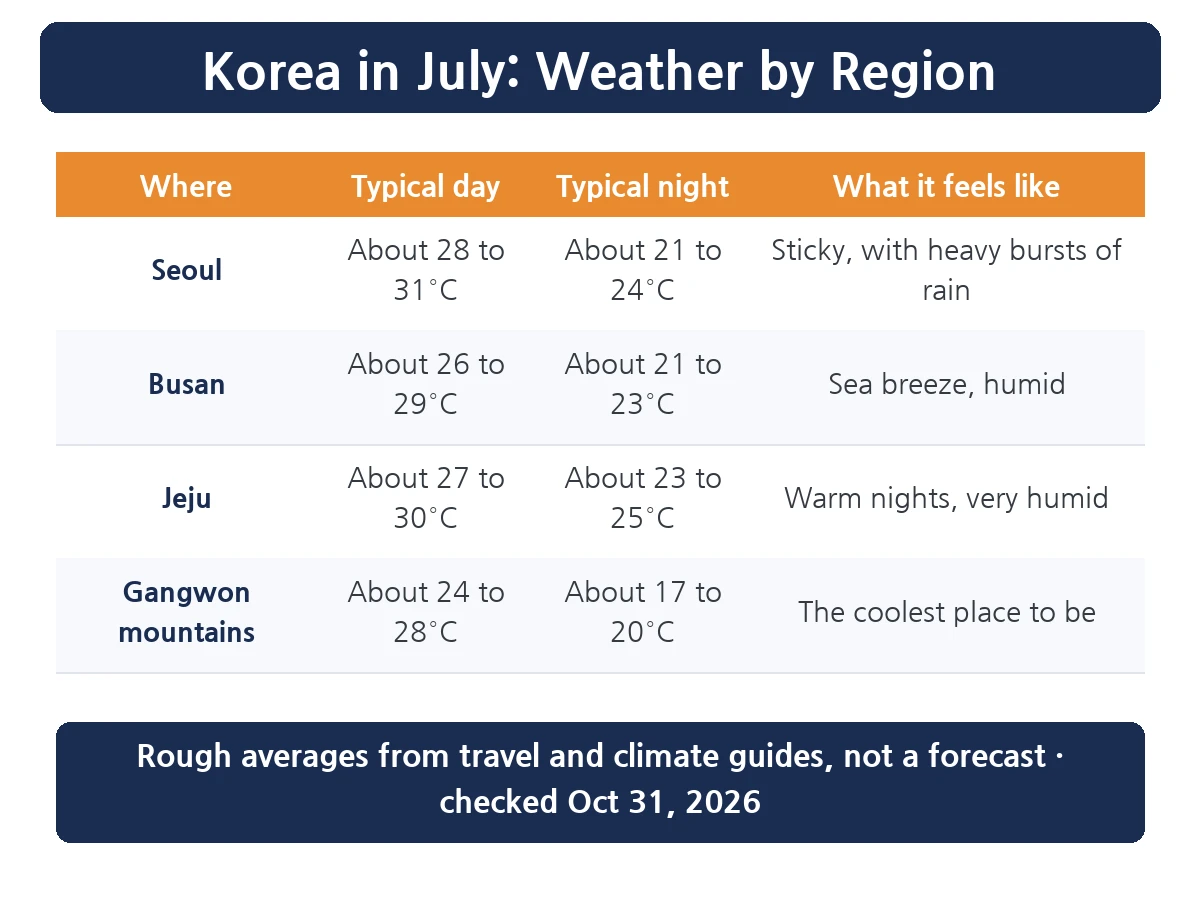
Heat is only half of it. Humidity is what you will talk about at dinner. A 30°C afternoon in Seoul feels a lot warmer than the same number somewhere dry, and you will sweat through a shirt just walking from the subway to a palace gate.
July is also the wettest stretch of the year in Seoul. One climate guide puts Seoul’s July rainfall at nearly 400 mm, a big number that mostly falls in heavy bursts rather than a gentle all-day drizzle. Some days pass with barely a drop. Others bring warnings on your phone.
When does the rainy season end?
The rainy season is called jangma. It usually reaches the south and Jeju in late June, then moves north. Guides disagree on when it ends, with some saying mid-July and others late July, and the true answer changes every year. In 2026 it started later than normal.
My rule for planning: treat the first half of the month as likely wet, and the second half as hot, with sudden showers. Late July and early August are usually the sweatiest days of the year. Typhoons are possible in summer too, more often later in the season. Check the Korea Meteorological Administration or your weather app the day before you travel, particularly for flights to Jeju and ferries.
If you are still choosing a month, compare this with Korea in June, which is drier and a little cooler.
Where to go
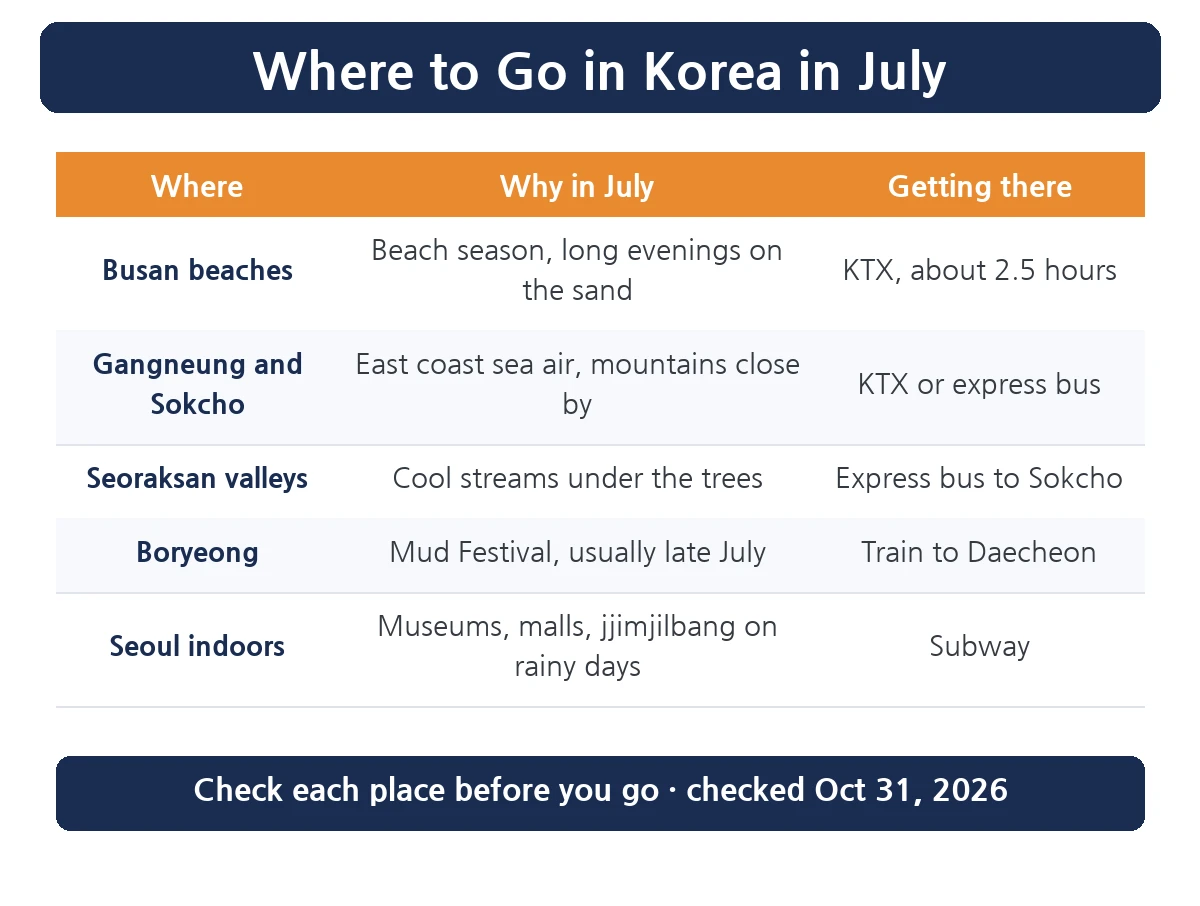
Busan and the beaches
Beach season is the reason July has a following. In 2026, Haeundae opened officially on June 26 and ran until September 15, with swimming hours from 9:00 to 18:00, while Songjeong closed on August 31. The city extends these dates as summers get hotter, so check again for 2027. Our Haeundae Beach guide covers how it works, and the coastal rides are worth doing even on an overcast day.
The east coast and Seoraksan
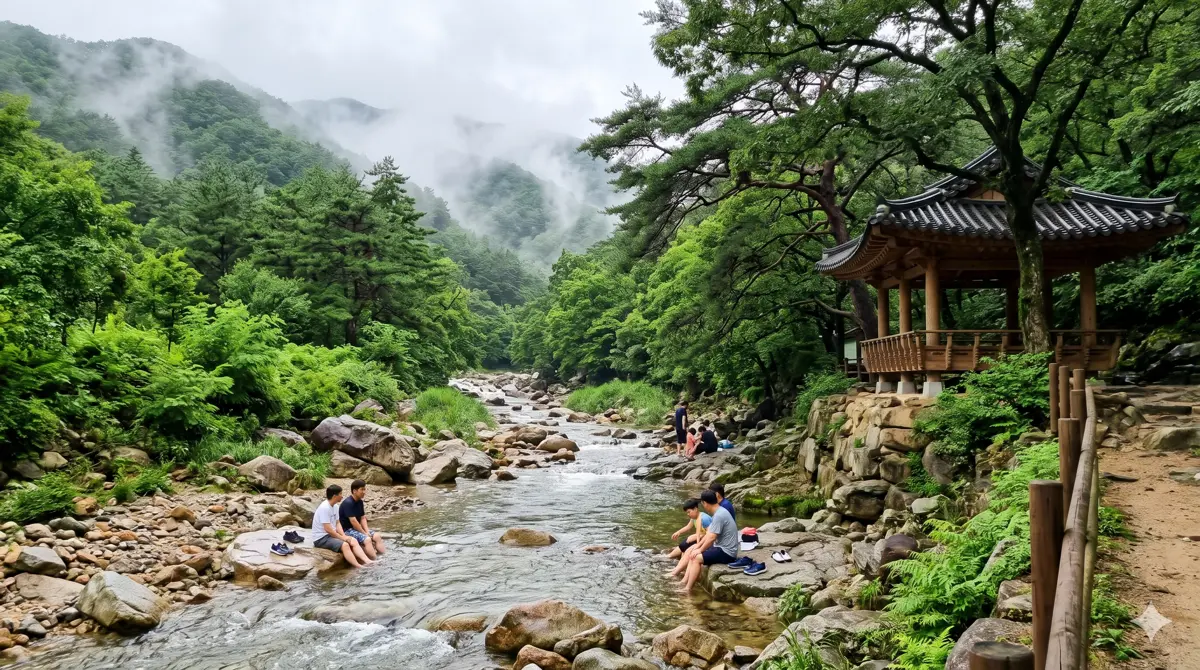
When Seoul gets heavy, people head east. The sea air in Gangneung and Sokcho is noticeably easier to breathe, and the Seoraksan valleys feel cool the minute you are under the trees. You smell wet pine and hear the stream before you see it. Trails can close after heavy rain, so check the national park notices on the morning.
Families can add a water park near Sokcho.
Boryeong Mud Festival
The famous one. In 2026 the Boryeong Mud Festival ran from July 24 to August 9 at Daecheon Beach, and earlier years followed a similar late-July pattern. No official 2027 dates had appeared when I checked, so watch mudfestival.or.kr before booking anything around it. Trains go from Seoul to Daecheon Station, and the beach is a short bus or taxi ride away. Bring clothes you never want to see again.
What to do when it pours
Rainy days in Seoul are easier than you think, because so much of the city is underground or indoors.
- Museums: the National Museum of Korea is huge and has free main galleries.
- Starfield COEX Mall and its library are connected to the subway.
- A jjimjilbang fills an entire wet afternoon cheaply.
- Food markets: Gwangjang Market is covered, and a pajeon on a rainy day is a Korean tradition.
- A cheap umbrella from any convenience store solves most problems for the walk between them.
Getting around in the wet
KTX and the subway run through almost everything. Buses slow down in heavy rain, so give yourself more time for airport transfers. Avoid valley streams and riverside paths during warnings, since water rises quickly here, and city parks along the Han River do sometimes close.
Google Maps does not give full directions in Korea, so you need Naver Map or KakaoMap with mobile data. Both are what locals use, and both show you the fastest indoor route. A Korea eSIM is the easiest way to keep them running.
What to pack
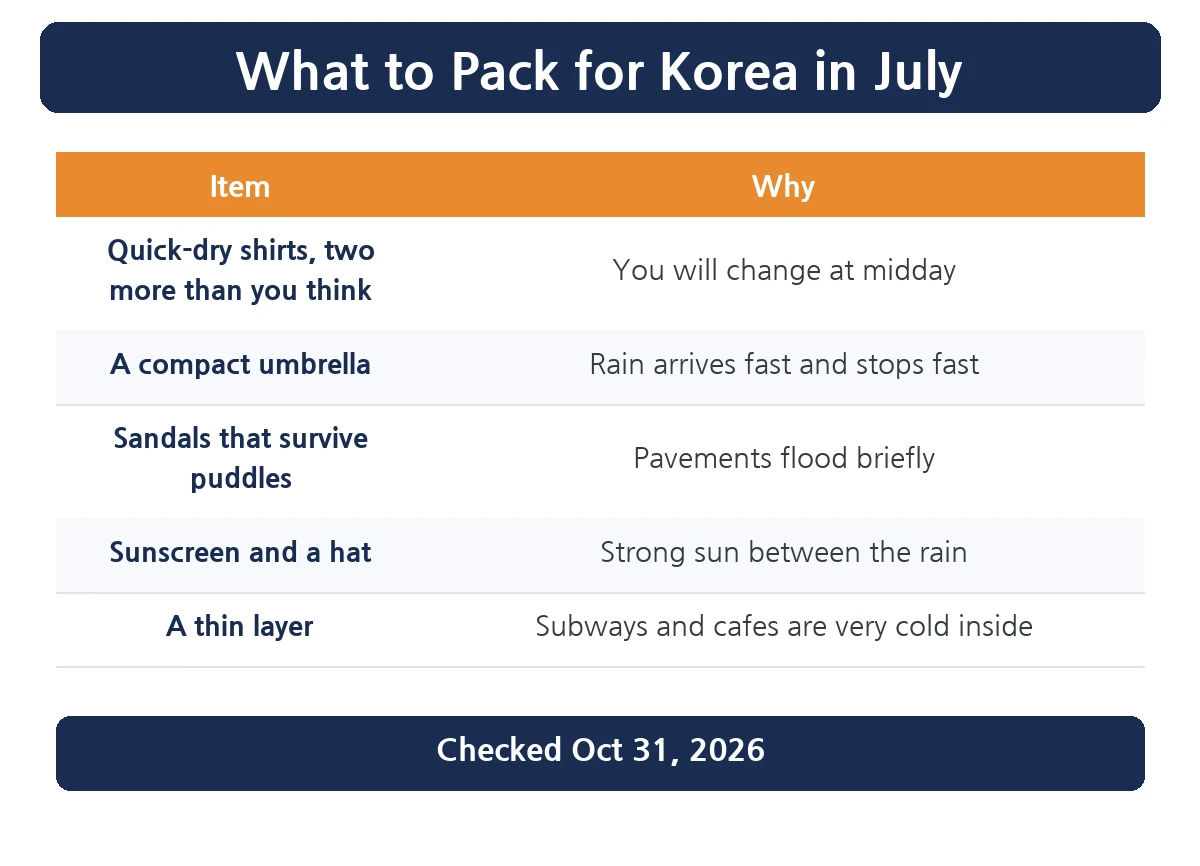
Leave the heavy jacket at home, though you may want a thin layer, because air conditioning on trains and in cafes runs hard. Shoes that take days to dry are a mistake. Bring two pairs if you can.
FAQ
Is July a good time to visit Korea?
It is good for beaches, green mountains and festivals, and less good for long outdoor sightseeing days. If you hate humidity, choose May, September or October instead.
How hot does it get in Korea in July?
Expect highs around 28 to 33°C in most cities, with humid nights above 20°C. Mountains are several degrees cooler.
How much does it rain in Korea in July?
A lot, but unevenly. Heavy bursts are more common than steady all-day rain, and the first half of the month is usually the wettest. Pack for it and keep your plans flexible.
Is the beach open in July?
Yes. Major Busan beaches opened on June 26 in 2026. Each beach sets its own dates, and 2027 dates come out closer to summer.
Should I book in advance for July?
Book KTX tickets and Busan or east coast hotels early if your trip overlaps school holidays, which start in late July.
The short version
Korea in July is hot, humid and rainy, but it is also alive. Stay flexible, keep your mornings for outdoor sights, save your afternoons for anywhere with air conditioning, and head to the sea or the mountains when the city gets heavy.